Jyoti Sondagar | Designer, Researcher, Strategist based in New York
User Researcher, Strategist, Storyteller
4 Weeks
User interviews, Focus Groups, Empathy maps, Customer journey maps, Ideation workshops
Figma, Miro ,Google Suite
How can we engage and support executives on experimentation in a way that resonates and is useful for them?
The Government of Canada Experimentation team at the Treasury Board of Canada supports government operations by promoting innovation through experimentation. They work with various departments to guide and implement experimental approaches in policy-making. Despite a government mandate to integrate experimentation into policy development, many executives remain hesitant due to concerns about its relevance and value.
The key challenge is to address these concerns by aligning experimentation with government priorities and clearly demonstrating how it can drive progress, improve efficiency, and support ethical, informed decision-making.
A major barrier in the process of onboarding and managing an innovation. It demands dynamic
engagement of executives resulting in variable interest in their action.
✦ Uncertainty
Executives in charge of leading experimentation in their departments are uncomfortable with the ambiguity of the process.
✦ Interactivity
The ambivalence towards experimentation is preventing more resources from being allocated for experimentation.
✦ Deficit System Approach
A lack of coordination between executives and their support teams is contributing to persistent gaps that must be addressed.
Bridging Gaps and Driving Innovation Through Executive-Led Experimentation, Advocacy, and Gamified Stakeholder Engagement.
In this Integrated Studio at Parsons, We Developed a pilot gamification strategy for the Government of Canada’s Experimentation Team to strengthen communication and collaboration across organizational levels.
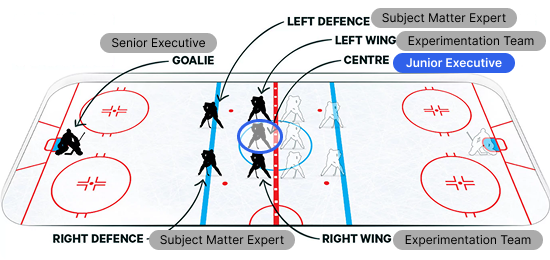
The initiative brought together Junior Executives, Subject Matter Experts, and Experimentation Team members in cross-functional teams to bridge gaps between executives, leaders, and frontline staff. Through interactive, inclusive, and community-driven engagement, the strategy aimed to foster innovation, enhance communication, and accelerate problem-solving.
After discussions with the Government of Canada Experimentation Team, we acknowledged their challenges in fostering a culture of experimentation. We recognized that building trust with all five executive levels was key to enhancing executive engagement. We applied a design thinking methodology and conducted comprehensive research and analysis to understand the difficulties faced by the team.


After the project started, we defined our research strategy and objectives, prioritizing an in-depth understanding of our target users and challenges.
“Executive engagement staff of the Canadian Government” was the subject of this design exercise.
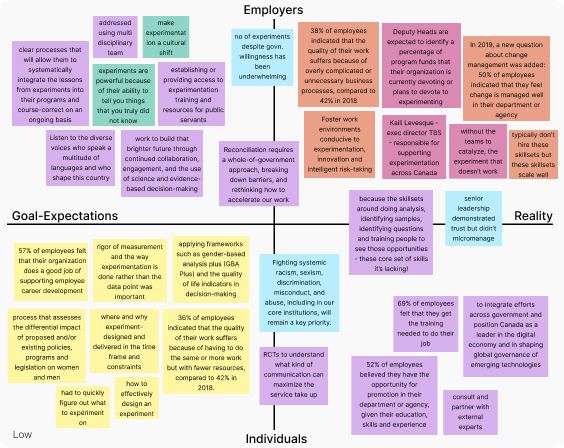
For this project, we engaged in rapid design research and synthesis, interviewing Canadian Government subject matter experts to understand the core process, their environment, and major tasks to accomplish. Through these interviews, we aimed to glean insights into their views on experimentation, understand the policy-making process, and pinpoint their pain points and needs.
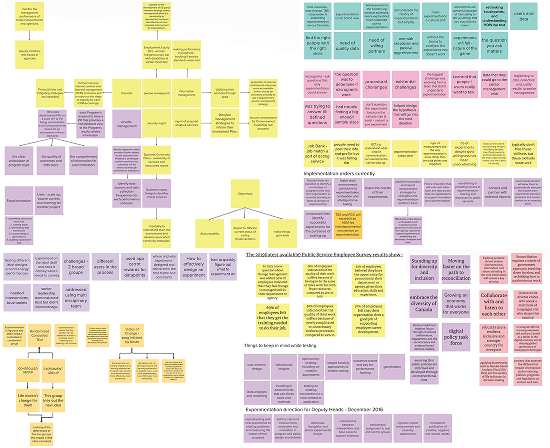
We began conducting secondary research to understand the environment, patterns, and organizational structure of the subject matter experts from the Treasury Board of Canada Secretariat’s culture of experimentation and team management system.
To understand users’ challenges, current workflow, environment, and key tasks, we conducted semi-structured interviews in collaboration with a team of subject matter experts from the Canadian Government.
3-4 Participants
Carving out a niche in a complex structure system
After conducting interviews and observations, I created user personas with information about their behaviors, technologies used, pain points, and need.
“I would love to experiment but feat to express and failure!”
Demographics:
Age: 33 years
Gender: Female
Occupation: Government Executive
Location: Toronto, Canada
Family: Married
Brief Story:
Jess is working with the Government of Canada and is eager to transform how things operate in the country. She manages a busy schedule, balancing family and office work, and juggles numerous responsibilities in both her personal and professional life. Jess is empathetic and believes in fostering change and opportunities. She focuses on building strong relationships with her peers and creating a safe environment for them.
Attributes:
Goals
Frustration
Features Jane would like to have:
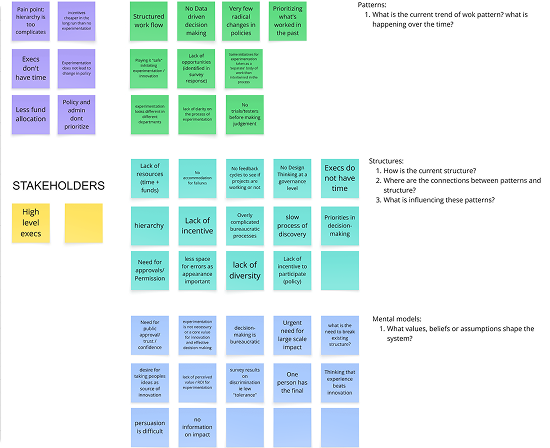
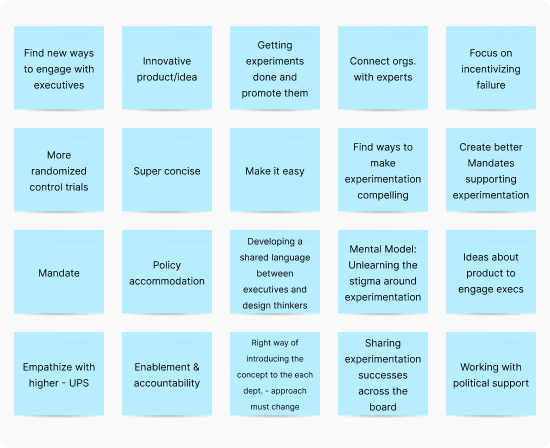
After analysis of secondary research and user interviews, participants’ responses were synthesized to identify key themes, opportunities, and potential features.
My next step was to tell a story of how the personas were currently carrying out the tasks.
We prioritized pain points based on their impact, persistence, and frequency.
Key issues shortlist included:
Research Findings


We used How Might We statements to transform each pain point into a clear, actionable question, encouraging ideation and ensuring a focused approach to solution development.
How might we engage and support executives in experimentation in a way that resonates and is useful for them?
External support for insights and evaluation
Periodic experiment pitches to corporates for business validation and support.
How might we reinforce that experimentation is not new and make executives feel comfortable with failure?
Externals pitches towards experiment commercialization
Inputs from external consultants, volunteers, mentors to different phases of the experiment.
How might we create effective target driven incentives to improve the involvement of executives to contribute actively?
Promotion of experimenter- executive communications for efficient conflict resolution, Higher value to experimenters in terms of support and resources
How might we reduce biases and maximize innovation potential in an experiment plan/proposal in the pre-experiment phase?
Associate executive teams deployed with experimenters to bring value to experiment plan
“There is a notable absence of the necessary platform and tools needed to spark change, along with an environment that actively supports continuous experimentation”.
How might we engage and support executives on experimentation in a way that resonates and is useful for them?
Reframing the System
Provide a streamlined decision process for Executives to experiment
Immediate Steps
Intermediate Steps
Long-term Steps
With the empathy I built the research phase, I proposed the following deliverables:
Concept Development
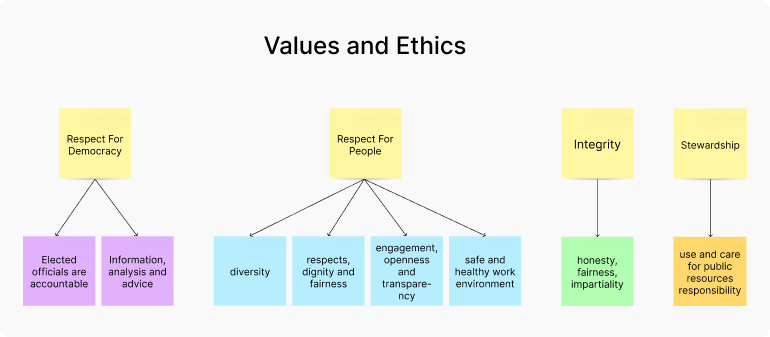
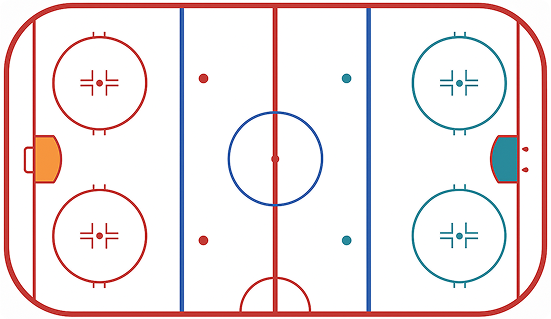
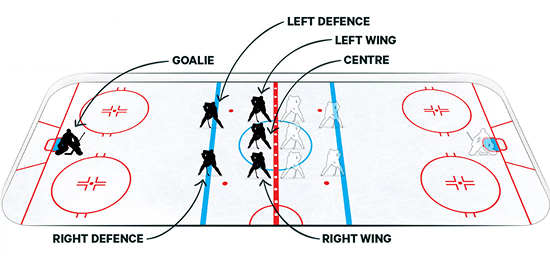
As we delved into various ideas, we discovered an exhilarating NHL team game. This inspired us to understand the significance of team players and how leaders can become more resonant and inclusive. We chose this as the foundation for our prototype narrative because of the inspiring strategies, decision-making skills, strengths, collaboration and regulations demonstrated, as well as the exemplary role of team leadership.
We incorporated real scenarios from their journey and strategically designed prototype narratives to test team dynamics under similar conditions. The decisions to be made in the game mirror real-life workplace scenarios.
We developed a variety of concepts for the board design, narrative, with Canadian Government’s involvement, approach, offerings, and other roadmap elements were integral to our process.
Prototype includes:
The experimentation team is refining executive presentations, focusing on priorities and wins. The upcoming presentation will feature background research and a strategic execution plan, highlighting the team’s contributions aligned with organizational goals.
Build a frame/ pattern plan accessible and visible to executive team.
Hockey is known for its teamwork, strategic thinking, and adaptability.
Key Aspects:
It is a great way to share voices from different perspectives, address issues as a team, and successfully work towards common goals.
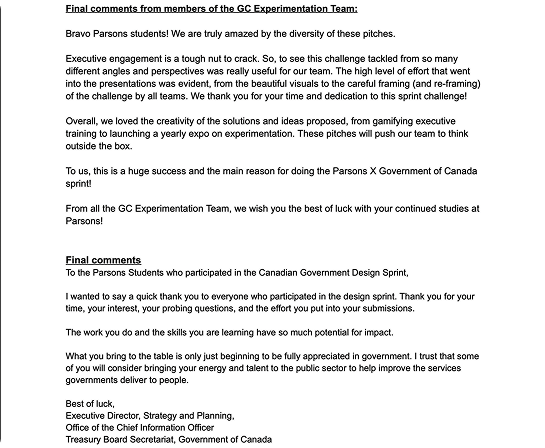
Presenting to the Government of Canada Experimentation Team
In this project, I learned that projects are often treated as ‘Cold Cases,’ centrally organized for potential future revisited. Experimentation plays a crucial role in identifying potential problems within the projects.”
I believe in collaboration and open communication, working closely to “Designing experiences where every vision comes alive.”